How Women Entrepreneurs Are Transforming the Agriculture and Food Processing Sectors
-
by
admin
- No Comments on How Women Entrepreneurs Are Transforming the Agriculture and Food Processing Sectors
Women have always been the backbone of Indian agriculture, contributing significantly to farming, livestock management, and post-harvest activities. Today, their role is expanding beyond cultivation and household support to entrepreneurship and business leadership.
From launching organic farming ventures to building successful food processing brands, women entrepreneurs are transforming the agricultural value chain. Their businesses are creating employment, adding value to farm produce, and strengthening rural economies while promoting sustainable growth.
As access to training, finance, and technology improves, women-led enterprises are becoming a powerful force in shaping the future of agriculture and food processing in India.
The Growing Role of Women in Agriculture
For generations, women have played a vital role in sowing, harvesting, seed preservation, livestock care, and food production. However, much of their contribution remained informal and unrecognized.
Today, increasing awareness, government support, and entrepreneurship programs are encouraging women to become business owners rather than only contributors to farming activities. Women are leading farmer producer organizations (FPOs), managing agri startups, and building successful enterprises across the agricultural sector.
This shift is creating new opportunities for rural development and economic empowerment.
Understanding Women Entrepreneurship in Agriculture
An agri-entrepreneur is someone who applies business principles to agriculture by producing, processing, marketing, or distributing agricultural products.
More women are entering agribusiness because of growing demand for organic products, processed foods, sustainable farming, and locally sourced produce. Improved access to digital platforms and government initiatives has also made it easier to start and grow agricultural businesses.
Women are finding opportunities in organic farming, food processing, dairy, livestock, floriculture, agri-tourism, and export-oriented ventures.
Why Women Entrepreneurs Are Driving Change
Women-led agribusinesses often focus on sustainability, quality, and community development. Many entrepreneurs adopt environmentally responsible farming methods while promoting traditional crops and indigenous food products.
Their businesses also encourage community participation by involving local farmers, self-help groups, and rural women in production and processing activities. This creates inclusive growth while preserving local knowledge and agricultural traditions.
By combining innovation with social impact, women entrepreneurs are reshaping agriculture beyond commercial success.
Transformation in Agriculture and Food Processing
Women entrepreneurs are introducing modern farming practices, improving farm productivity, and encouraging better resource management. Many are leading farmer collectives that improve market access and strengthen bargaining power for small producers.
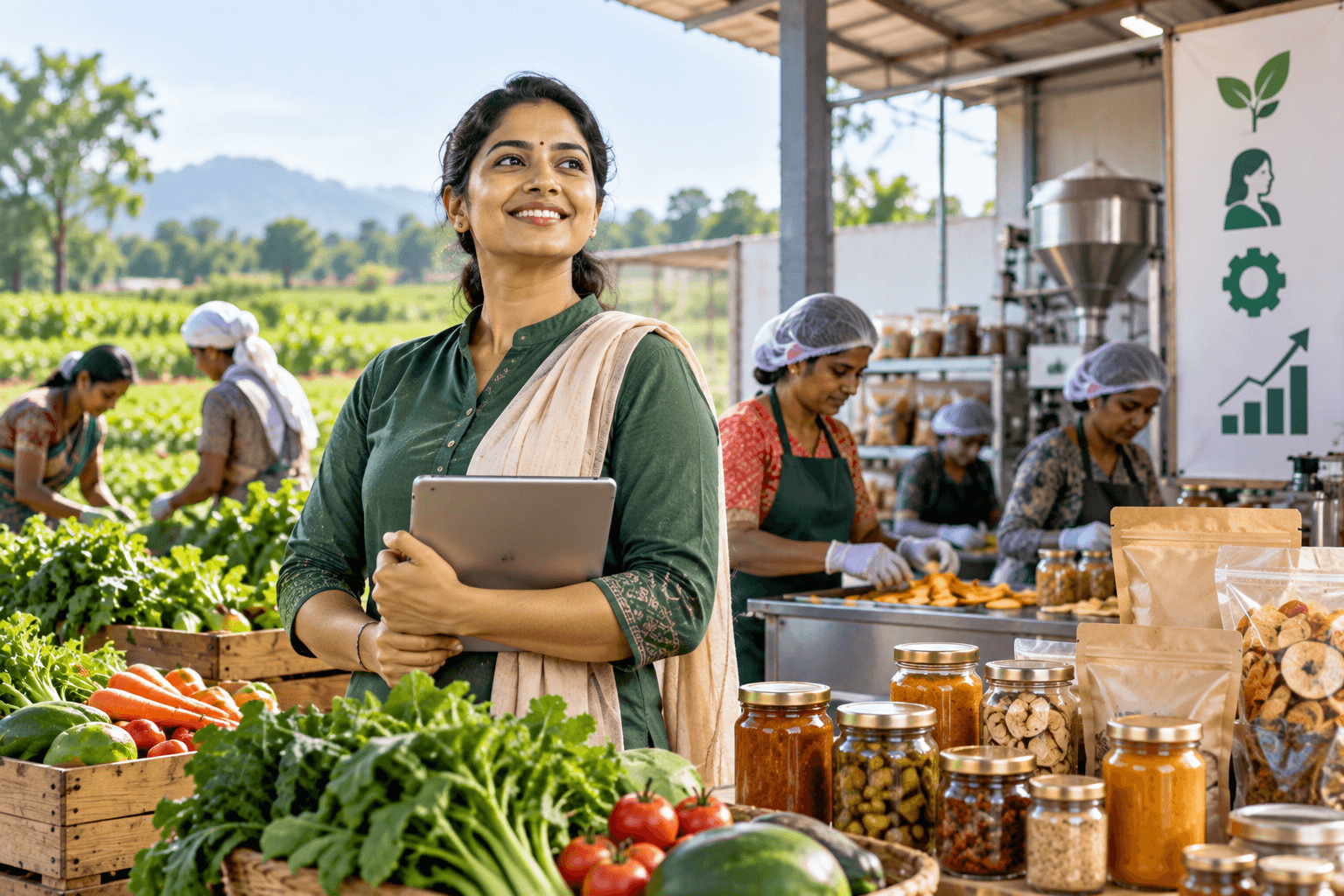
In food processing, women are converting raw agricultural produce into packaged foods, spices, pickles, millet products, fruit preserves, and ready-to-cook items. Value addition increases product shelf life, reduces post-harvest losses, and allows farmers to earn higher returns.
Many women-led businesses are also expanding into premium, health-focused, and regional food markets, creating brands that reach consumers across India and beyond.
Key Areas of Impact
Women entrepreneurs are making a significant difference across multiple agricultural sectors, including:
- Organic farming and sustainable agriculture
- Food processing and packaging units
- Dairy and livestock-based enterprises
- Export-oriented agricultural businesses
- Rural agri-tech and value-added product startups
These ventures not only generate income but also strengthen agricultural supply chains and improve market access for farming communities.
Economic and Social Impact
Women-led agribusinesses contribute directly to household income and financial independence. As businesses expand, they create employment opportunities in production, processing, packaging, logistics, and marketing, particularly in rural areas.
The impact extends beyond economics. Women entrepreneurs inspire other women to pursue business opportunities, support children’s education, and improve family well-being. Their success encourages greater participation of women in leadership and decision-making, contributing to more inclusive rural development.
Challenges Faced by Women Entrepreneurs
Despite growing opportunities, women continue to face several barriers.
Limited access to finance, inadequate business and management training, and difficulty reaching larger markets often slow business growth. Many women also balance entrepreneurial responsibilities with household duties, making time and resource management challenging.
Awareness of government schemes, certification requirements, and market opportunities also remains limited in many rural areas.
How Skill Development Makes a Difference
Skill development is essential for building successful women-led agribusinesses.
Training in business management helps entrepreneurs plan operations, manage finances, and make informed decisions. Food processing courses teach techniques for value addition, quality control, packaging, and product development.
Knowledge of branding, marketing, digital commerce, and financial planning enables women to build profitable businesses that can compete in larger markets. Export awareness and supply chain management further prepare entrepreneurs to scale their enterprises.
The Role of Agri Business Management
Agri Business Management equips women entrepreneurs with the skills needed to operate sustainable businesses. It helps them understand market demand, manage costs, develop business strategies, and build strong customer relationships.
Combined with technical agricultural knowledge, these business skills enable women to transform farming into profitable and scalable enterprises.
Government Support for Women Entrepreneurs
Several government initiatives encourage women to enter agriculture and food processing through entrepreneurship schemes, financial assistance, self-help group programs, skill development initiatives, and capacity-building workshops.
These programs improve access to funding, technical knowledge, and business opportunities, helping women establish and expand successful enterprises.
Role of Institutions Like SIILC
Institutions like SIILC play an important role in strengthening women’s entrepreneurship through specialized training in Agri Business Management, food processing, value addition, leadership development, and rural entrepreneurship.
By combining practical learning with industry-focused knowledge, such programs help women build competitive businesses that contribute to agricultural growth and rural prosperity.
The Future of Women-Led Agribusiness
Women entrepreneurs are expected to play an even greater role in the future of Indian agriculture. The growth of digital commerce, sustainable farming, export markets, and branded food products will create new opportunities for women-owned enterprises.
Supporting women entrepreneurs will strengthen rural economies, improve agricultural value chains, encourage innovation, and promote inclusive economic growth.
Women entrepreneurs are redefining agriculture and food processing by transforming traditional farming into modern, value-driven businesses. Through innovation, sustainability, and leadership, they are creating employment, increasing farmer incomes, and strengthening rural communities.
With access to the right skills, training, and institutional support, women can continue to become powerful drivers of agricultural and economic transformation.
Call to Action: Explore SIILC’s entrepreneurship, Agri Business Management, and food processing programs to gain the skills needed to build successful and sustainable agricultural enterprises.