From Farm to Market: How Export-Import and Packaging Skills Increase Agricultural Profitability
-
by
admin
- No Comments on From Farm to Market: How Export-Import and Packaging Skills Increase Agricultural Profitability
Introduction
- Modern agriculture extends far beyond cultivation, it involves processing, packaging, branding, and market access.
- Farmers and agribusinesses today need to understand the complete value chain to maximize profits.
- While quality production is important, Export-Import Management and Packaging Technology play a crucial role in increasing product value and reaching larger markets.
- This blog explores how these skills help transform agricultural products into profitable business opportunities.
Understanding the Modern Agricultural Value Chain
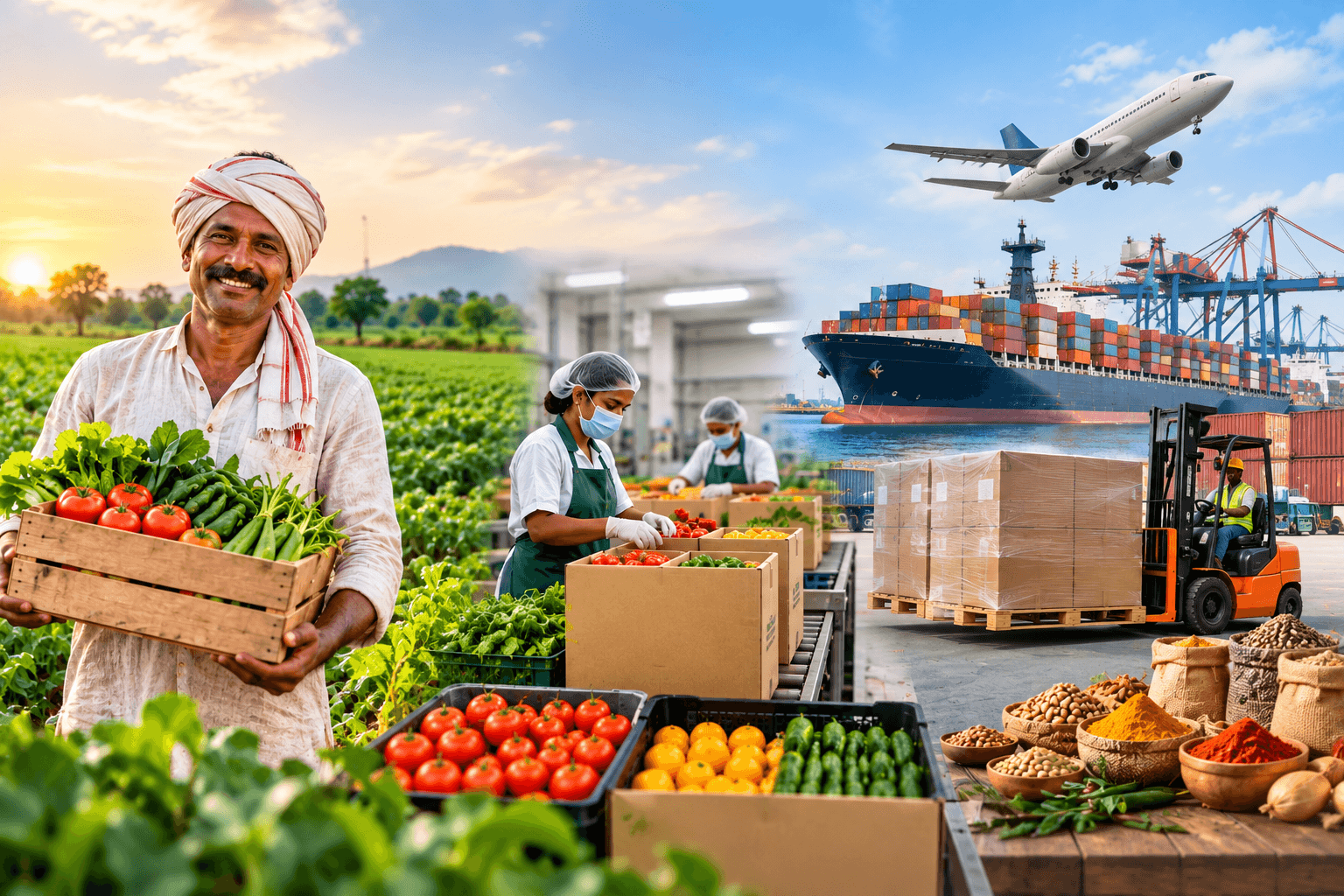
The modern agricultural value chain kind of includes every stage from the farm area to the consumer, you know. If farmers and agribusinesses work on processing packaging branding and distribution in a better way, they can lift the product value, get into broader markets, and earn more money.
From production to market
Modern agriculture, it covers basically every step starting from cultivating crops, then processing, packaging, transporting, and finally selling them. When each stage is managed efficiently, farmers can get better returns, and not just “hope” the season goes well.
Why value addition matters
Value addition raises the value of agricultural products, mainly through processing, branding, or simply better packaging. This kind of improves their chances to connect with more customers, and it can lead to higher profits for farmers.
Importance of market readiness
Market readiness is mostly about checking that the products really match the quality expectations, packaging rules, and regulatory requirements, before anything gets sold.
###
Why Agricultural Profitability Depends on More Than Farming
Farming today is not only about getting good crops, right? It’s more like farmers also have to think about how they’ll sell everything, marketing, branding, packaging and figuring out what customers really want, so profits go up and they can keep pace in a competitive scene.
Challenges in traditional agricultural marketing
A lot of farmers still depend on middlemen and those local markets. And that setup can, sort of, cap their earnings. On top of that, weak market access and sudden price changes do a number on profitability, sometimes quite directly.
Growing competition in domestic and international markets
With more players in the market, you can’t just grow, well not really. Quality packaging and steady output matter a lot. When products actually fit what buyers expect, they’re more apt to get noticed, and they can move farther into bigger, wider markets too.
Need for business-oriented farming
Modern farming is more than just working the land , it needs a business mindset. Knowing costs, watching market shifts is essential, but branding and value addition count just as much. Once farmers grasp these things properly, they can make better decisions.
What Is Export-Import Management in Agriculture?
Export-Import Management in agriculture is basically, the whole process of selling and buying agri products across different countries. It works like a bridge, so farmers and companies can reach more people, and also maybe get better income, or at least better earnings overall.
Definition and importance
In simple terms, this means managing what gets sent out and what gets brought in. When it is done well, businesses don’t only stick to local markets but can also grow their reach, step by step, into wider ones.
Key components
You end up dealing with a lot of parts, like export rules and approvals, then paperwork and certificates, correct packing, careful quality benchmarks, and of course transport arrangements too. Sometimes, it feels endless but it matters.
Why export knowledge matters
If farmers understand exporting, they can access global demand, follow international requirements, and improve their revenue. And in the end, that knowledge becomes like a guardrail, helping them not get stuck when standards are higher.
How Export-Import Skills Increase Agricultural Profitability
Export-import skills, somehow make it easier for farmers and agribusinesses to push out into wider markets, get better payment rates and grow their whole operation.
Expanding beyond local markets
Once you sell at national, or international levels, there are simply more openings for buyers and sales. H3: Access to premium pricing When the product quality is solid, global buyers often pay better rates for it.
Diversifying customer base
Working with different types of customers reduces reliance on just one location or one channel, so the income feels steadier.
Building international business opportunities
Knowing how exports work helps firms form lasting arrangements and mutual trust with importers and distributors around the world.
What Is Packaging Technology?
Packaging technology is basically how agricultural products get packed so they stay protected, fresher, and good looking while they’re stored, moved or shipped around. It’s not only about looks, but also about keeping everything in decent condition.
Definition and purpose
In general, it guards the products from damage, impacts from the outside world, and it helps maintain their quality for longer time.
Types of agricultural packaging
You’ll see pretty common forms like bag materials, cartons, boxes, pouches, bottles, and even vacuum packing. Sometimes mixed choices are used as well, it really depends on the crop, and how fragile it is.
Importance in agricultural marketing
Packaging that works well makes customers stop and notice, it builds trust, and it can raise the perceived value of the agricultural products, like a clean wrapping or a simple but smart label.
##
How Packaging Skills Add Value to Agricultural Products
Good packaging, when done right, does more than just wrap things up. it protects the goods it also helps the quality stay steadier, and it can lift market value too.
Reducing post-harvest losses
With the correct packaging, you avoid a lot of bruising and breakage , so less ends up thrown away during storage and shipping.
Increasing product shelf life
It helps the product stay fresh for a longer stretch of time , so the end result is less spoilage and a steadier supply.
Improving product presentation
When the package is well planned and visually clean , customers tend to notice it faster and feel more confident.
Building brand identity
Distinct branded packaging helps shoppers recognize the product immediately, and it builds trust over time too, even when they catch it from far away.
Meeting export standards
The right approach to packaging ensures the goods follow quality and safety rules needed for overseas markets, and that’s a big deal in many places.
The Combined Power of Export-Import and Packaging Skills
The combined power of export-import know-how and packaging skills kind of works like a duo to get agricultural goods out there into more places and usually for a better return.
Packaging prepares products for global markets
Good packaging keeps items secure during handling ,and it also has to match international quality benchmarks or buyers won’t take it seriously.
Export knowledge connects products with international buyers
When a business understands exporting, it can locate international buyers more easily and widen its footprint.
Higher-quality presentation increases buyer confidence
If products are packed well, the first look feels solid and that often turns into customer trust.
Better pricing through value-added products
Goods that are packaged well and export ready sometimes bring in higher prices ,because the whole value story feels clearer.
Agricultural Products That Benefit Most
A lot of agricultural products can earn higher returns thanks to proper wrapping, repackaging, and export chances.
Fruits and vegetables
Fresh packing helps keep the quality steadier, and keeps everything more fresh during transport, you know.
Spices and herbs
Solid packaging locks in the aroma, and makes the products look more appealing in the market.
Organic produce
Certified packing creates credibility, and also draws premium purchasers.
Processed food products
Reliable packing lengthens shelf life and, also in a quiet way, upgrades brand value, more than you’d think.
Cereals, pulses, and grains
Well done packing shields the goods from dampness, pests and bruising damage.
Business Opportunities Created Through These Skills
Export-import know-how and packaging expertise open up fresh ways to earn money, because they help agricultural goods reach bigger, and usually more profitable, markets.
Agricultural export businesses
Start operations that move agricultural products to customers in outside markets. It can lift both sales and overall profit margins.
Food packaging enterprises
Run packaging services that shield products and, at the same time, raise their market appeal or value. Farmers and food companies really need these kinds of solutions.
Value-added food product brands
Transform fresh, raw produce into recognizable branded items like spice blends, pickled mixes, or milled flour. When it’s value-added the margins are often better, and the returns tend to be steadier.
Agri logistics and supply chain businesses
Provide storage, transportation and delivery support for farm products. Smart logistics, keeps items safe, and helps them arrive to the market in good condition.
Farm-to-export business models
Get products directly from farms to overseas buyers. That reduces the whole middleman layer and often helps producers pocket stronger prices for their crops or harvests. It’s a straightforward idea but kind a tricky in practice too.
Real-World Impact / Example Scenarios
Case 1 – Farmer increasing income through export-ready packaging
One farmer updated their packaging, to match export standards, and well it really helped with better pricing plus reduced losses too.
Case 2 – Agribusiness expanding internationally with export training
After going through export procedures training, the agribusiness started serving international markets and picked up brand new customers.
Case 3 – Food processing startup building a premium agricultural brand
A startup leaned hard into quality packing and branding, so they could offer more “premium” style products and that translated into higher sales even in tough competitive markets.
Common Challenges Without Export and Packaging Knowledge
Without these capabilities, farmers could see reduced earnings, greater losses and less chance of reaching buyers.
High post-harvest losses
If handling and packaging are not right, product damage happens, plus you end up with more wastage.
Poor product presentation
When the packaging looks plain or not quite eye catching, the item becomes less attractive to buyers, almost immediately.
Difficulty meeting export standards
No real export know-how can mean it is hard to comply with the international quality rules.
H3: Limited market reach If a business doesn’t understand exporting, it often stays stuck in local markets, even when bigger demand exists.
How Training Helps Build Profitable Agricultural Businesses
Training helps farmers and agribusiness teams get the know-how they need, to grow stronger, compete smarter and earn more profit over time.
Learning export-import regulations
Training helps people understand export rules, the paperwork needed , and the trade requirements that come with shipping products.
Understanding modern packaging technologies
It supports improved packaging approaches, not only to keep items safer but also to raise perceived quality.
Building branding and marketing skills
Training helps develop recognizable brands, and also helps pull in more customers from different places.
Developing international trade knowledge
It builds the understanding required to step into global markets and actually do well there.
Role of Institutions Like SIILC
Institutions like SIILC sort help students and professionals get hands on skills, so they can move into successful careers in agribusiness without too much delay.
Export-Import Management programs
These programs cover the basics of international agricultural trade and the whole export workflow including the processes around it.
Packaging Technology courses
Students get to learn contemporary packaging methods, which can raise product quality and overall worth.
Agri Business Management training
This training builds business abilities, plus marketing thinking and management know how, all suited to the agriculture sector.
Industry-oriented skill development
The learning is practical and industry focused, so learners get ready for real world agricultural jobs, not just theory.
Future Trends in Agricultural Marketing
Agricultural marketing is shifting fast with global demand, tech, and a stronger push toward value-added goods. Kind of like, people want more than just the raw stuff, so everyone is adjusting.
Growth of export-oriented farming
A lot more farmers are growing crops to match international market demand, not just local buyers.
Increasing demand for sustainable packaging
Environment friendly packaging is starting to matter a lot, for consumers and also for businesses who want a cleaner image.
Digital trade and global agricultural markets
Online platforms are making it simpler to link up with buyers across the world. It feels more direct, and easier to scale.
Greater focus on branded agricultural products
When products are branded, companies can build credibility and usually fetch better margins. Trust goes up, and so does the price, in a way.
Building a Successful Farm-to-Market Strategy
So you want a farm to market strategy that kind works in real life, right. It mixes great production with smart marketing, packaging choices, and easy market access. When it is done well, farmers usually earn more and the whole operation can grow, steadily.
Focus on product quality
Products that are consistent and well-made tend to build customer trust. And once trust shows up, demand often follows, like pretty directly.
Invest in modern packaging solutions
Modern packaging matters, because it protects the goods ,and it tends to lift the perceived worth as well. It can also cause everything to look more inviting, which is sort of half of the whole deal.
Learn export procedures and compliance
If you learn the export procedures and rules, your products can reach international buyers without so many slow-downs or surprises.
Build strong domestic and international market networks
When market networks are strong, you unlock more opportunities and you usually get steadier sales.
Conclusion
Modern agriculture is not just about growing crops, it’s also about export know how and solid packaging know how, so they can push more value and reach stronger profitability. When farmers, and agribusinesses learn those skills they can reduce wasted product, connect with worldwide markets more quickly, and sooner or later build steadier, more dependable operations.
- Call to Action: Join SIILC’s Export-Import Management and Packaging Technology programs, so you can learn the hands on skills required to move agricultural products from the farm to international markets.
FAQs
Why is packaging important in agriculture?
Packaging shields agri products, helps them stay fresh, and often pushes up their market value. It also protects them during handling, storage and the whole transport chain, so a lot less gets wasted.
How does export-import knowledge benefit farmers?
It basically lets farmers reach international markets, find more people to sell to, and maybe even bargain for nicer prices. Meaning, they aren’t totally trapped by local demand, they can draw from a bigger trading space.
Which agricultural products have the highest export potential?
In general, fruits, vegetables, spices, grains, organic produce and processed food goods tend to pull strong export interest. They usually match up well with what buyers want, and supply can be organized more smoothly, sort of like with less chaos.
How does packaging reduce post-harvest losses?
Proper packaging keeps bruising, spoilage and wastage from happening while the items are being stored and shipped. When it’s done the right way the chances of damage drop quite a lot, and shelf life, also tends to stretch out.
How can I learn export-import and packaging skills for agribusiness?
You can take up professional training programs like SIILC, to pick up practical know-how, plus industry-ready skills that help in real operations.