Why Hydroponic Farming and Terrace Gardening Are Ideal Solutions for Modern Urban Agriculture
-
by
admin
- No Comments on Why Hydroponic Farming and Terrace Gardening Are Ideal Solutions for Modern Urban Agriculture
Rapid urbanization is transforming cities across the world. As buildings replace farmland and populations continue to grow, the demand for fresh, healthy, and locally produced food is increasing. At the same time, consumers are becoming more conscious about sustainability, food safety, and self-sufficiency.
Modern urban agriculture offers practical solutions to these challenges. Among the most effective approaches are Hydroponic Farming and Terrace Gardening, two innovative methods that make food production possible even in space-constrained urban environments. Whether for personal consumption or commercial farming, these techniques are helping create greener, healthier, and more resilient cities.
Understanding the Rise of Urban Agriculture
Urban agriculture refers to the cultivation, processing, and distribution of food within or around cities. It includes rooftop farms, terrace gardens, hydroponic systems, vertical farming, and community gardens.
The growing popularity of urban farming is driven by shrinking agricultural land, increasing transportation costs, and rising demand for fresh produce. Advancements in technology have also made urban farming more accessible, allowing individuals and businesses to grow crops efficiently in limited spaces.
What Is Hydroponic Farming?
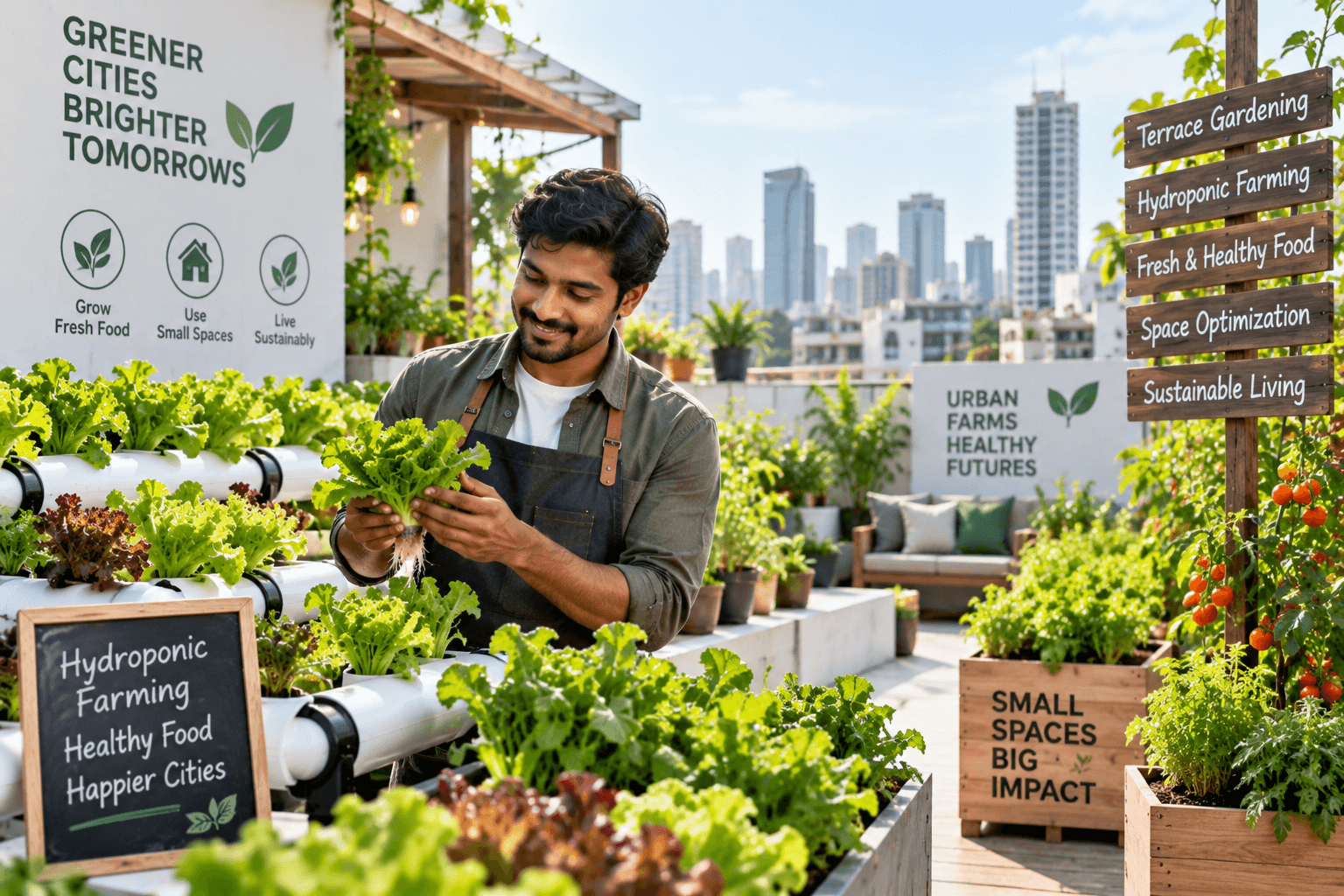
Hydroponic farming is a method of growing plants without soil. Instead, crops are cultivated using nutrient-rich water solutions that provide essential minerals directly to the roots.
Hydroponic systems often use controlled environments where factors such as light, temperature, humidity, and nutrient levels are carefully managed. Common systems include nutrient film technique (NFT), deep water culture (DWC), drip systems, and vertical hydroponic setups.
This technology enables faster growth, efficient resource use, and year-round production, making it highly suitable for urban agriculture.
What Is Terrace Gardening?
Terrace gardening involves converting rooftops into productive green spaces for growing vegetables, herbs, fruits, and ornamental plants. Using containers, raised beds, or grow bags, homeowners can cultivate fresh produce without requiring traditional farmland.
Popular terrace crops include tomatoes, spinach, coriander, chillies, leafy greens, eggplants, cucumbers, and medicinal herbs. Besides supplying fresh food, terrace gardens also improve the urban environment by increasing greenery and reducing heat.
Why Urban Areas Need Alternative Farming Solutions
Cities face several challenges that make conventional farming difficult. Agricultural land is shrinking due to rapid development, while growing populations continue to increase food demand.
Urban food systems also depend heavily on long transportation networks, contributing to higher emissions and food wastage. Climate change and environmental concerns further highlight the need for sustainable local food production.
Hydroponic farming and terrace gardening address these issues by enabling food cultivation closer to consumers while making efficient use of limited space.
Benefits of Hydroponic Farming
Hydroponic farming offers several advantages for urban agriculture.
It allows maximum crop production within small areas through vertical and compact farming systems. Since water is recirculated, hydroponic farms consume significantly less water than conventional agriculture.
Controlled growing conditions lead to faster crop growth, higher yields, and consistent quality throughout the year. Crops are also less dependent on seasonal weather changes, making production more predictable for commercial growers.
These benefits make hydroponics an attractive option for entrepreneurs seeking high-value urban farming opportunities.
Benefits of Terrace Gardening
Terrace gardening transforms unused rooftop spaces into productive food-growing areas. Families gain access to fresh, chemical-free vegetables while reducing household grocery expenses.
Green rooftops also improve air quality, reduce urban heat, and support biodiversity by attracting birds and pollinators. Gardening provides additional lifestyle benefits by reducing stress, encouraging physical activity, and strengthening connections with nature.
For beginners, terrace gardening offers an affordable and practical entry point into urban farming.
Hydroponic Farming vs Terrace Gardening
Although both methods support urban agriculture, they serve different purposes.
Hydroponic farming requires a higher initial investment and technical knowledge but offers greater productivity and commercial potential. Terrace gardening is simpler to establish, less expensive, and ideal for home use or small-scale cultivation.
Hydroponics is well suited for entrepreneurs and commercial producers, while terrace gardening is an excellent choice for beginners and households looking to grow their own food.
Supporting Sustainable Agriculture
Both hydroponic farming and terrace gardening contribute to more sustainable food systems.
They reduce water consumption, lower transportation-related emissions by promoting local production, and minimize environmental impact through efficient resource use. By bringing food production closer to consumers, these methods strengthen urban food security while encouraging responsible agricultural practices.
Business Opportunities in Urban Agriculture
Urban agriculture has created several new business opportunities.
Entrepreneurs are establishing commercial hydroponic farms that supply restaurants, supermarkets, and premium retailers with fresh produce. Others offer terrace gardening consultancy, installation services, maintenance support, and training programs.
Growing consumer demand for healthy food has also encouraged businesses focused on organic vegetables, specialty herbs, microgreens, and farm-to-home delivery services. As awareness increases, urban farming startups continue to expand across Indian cities.
Challenges and the Importance of Training
Despite its growing popularity, urban agriculture comes with challenges. Initial setup costs for hydroponic systems can be high, while both methods require technical knowledge and regular monitoring.
Many aspiring growers lack experience in crop management, nutrient balancing, pest control, or system maintenance. Professional training helps overcome these challenges by providing practical knowledge of hydroponic systems, terrace garden planning, sustainable farming practices, and agribusiness management.
Role of Institutions Like SIILC
Institutions like SIILC support aspiring urban farmers through specialized programs in Advanced Hydroponic Farming, Terrace Gardening, Agri-Business Development, and agricultural entrepreneurship.
These practical training programs equip learners with the technical and business skills needed to establish productive farms, launch urban agriculture ventures, and contribute to sustainable food systems.
The Future of Urban Agriculture
As smart cities continue to evolve, urban agriculture will become increasingly important. Vertical farming, controlled-environment agriculture, digital monitoring systems, and sustainable food production will create new career opportunities and business models.
Hydroponic farming and terrace gardening complement each other perfectly. While hydroponics delivers technology-driven commercial production, terrace gardening empowers households to grow their own food. Together, they address urban food challenges while creating greener, healthier, and more sustainable cities.
Urban agriculture is no longer a niche concept, it is becoming an essential part of sustainable city living. Hydroponic farming and terrace gardening offer practical, scalable solutions that improve food security, conserve resources, and create entrepreneurial opportunities.
Whether your goal is to grow fresh vegetables at home or establish a commercial urban farm, developing the right skills is the first step toward success.
Call to Action: Explore SIILC’s Hydroponic Farming and Terrace Gardening programs to gain the practical knowledge and business skills needed to thrive in the future of urban agriculture.