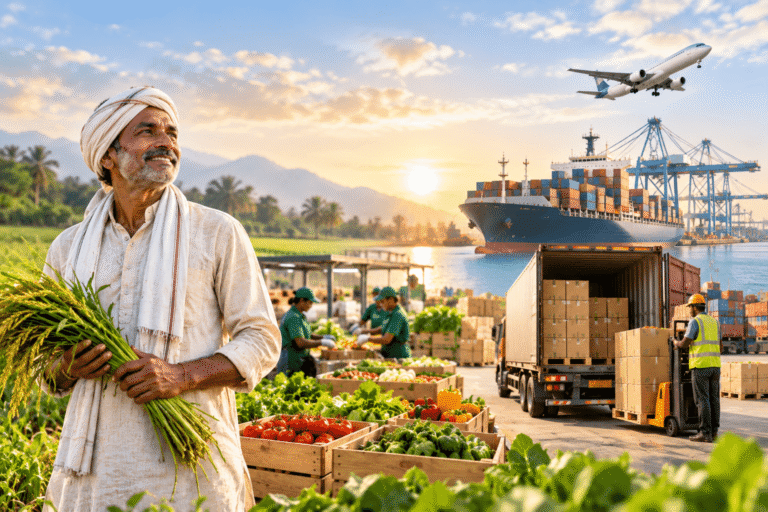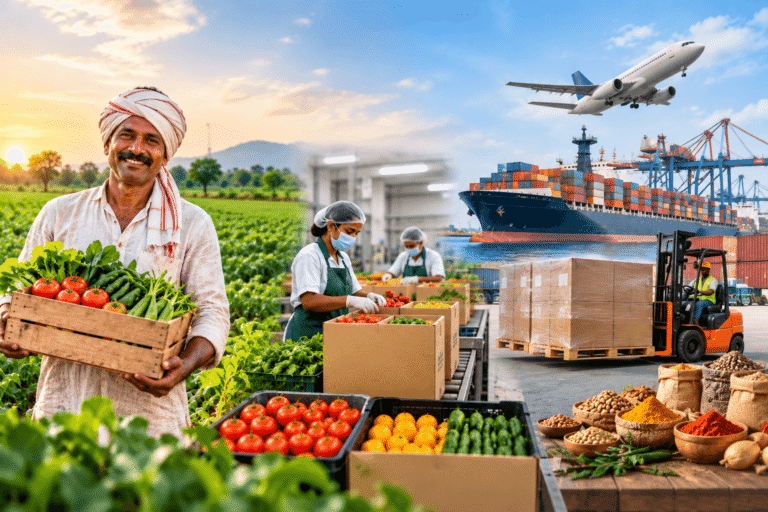
Agri Business Management + FPO Model: A Powerful Combination for Rural Growth
-
by
admin
- No Comments on Agri Business Management + FPO Model: A Powerful Combination for Rural Growth
Indian agriculture is evolving beyond traditional farming. Today, success in agriculture depends not only on producing quality crops but also on managing them as profitable businesses. As farmers face challenges such as fluctuating market prices, rising input costs, and climate uncertainty, new approaches are essential for sustainable growth. One of the most effective solutions is the combination of Agri Business Management and the Farmer Producer Organization (FPO) model. Together, they help farmers build stronger enterprises, improve profitability, and create lasting economic opportunities for rural communities.
Understanding the FPO Model
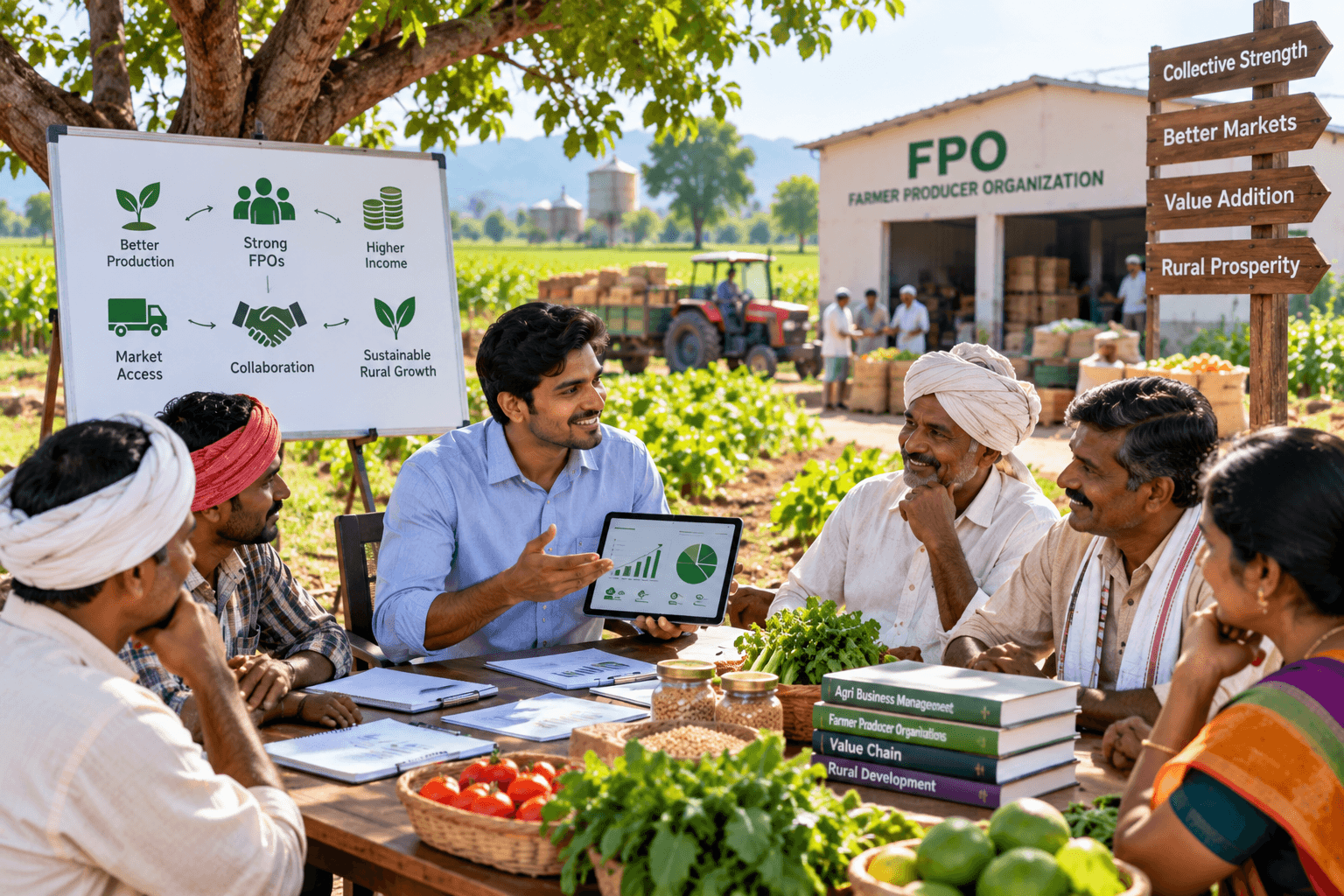
A Farmer Producer Organization (FPO) is a legally registered group of farmers who come together to improve production, procurement, processing, and marketing of agricultural products. By working collectively, members gain access to better prices, quality inputs, and larger markets. The primary objective of an FPO is to strengthen the bargaining power of small and marginal farmers while reducing operational costs. FPOs also make it easier for farmers to benefit from government schemes, institutional finance, and market linkages. As rural economies continue to modernize, FPOs have become an important tool for inclusive agricultural development.
What Is Agri Business Management?
Agri Business Management applies business principles to agriculture, helping farmers manage farming as a profitable enterprise rather than only a production activity. It covers financial planning, marketing, supply chain management, business strategy, branding, value addition, and risk management. These skills enable farmers to make informed decisions, identify profitable markets, and improve operational efficiency. In today’s competitive environment, agricultural knowledge alone is no longer sufficient. Farmers also need business skills to create sustainable and scalable enterprises.
Why the Combination Matters
While FPOs provide collective strength, Agri Business Management provides the strategic direction needed to convert that strength into measurable business success. This combination bridges the gap between farming and entrepreneurship. Instead of functioning as informal farmer groups, FPOs become professionally managed organizations capable of building brands, negotiating contracts, attracting investment, and entering high-value markets. Together, they create a strong foundation for sustainable rural enterprises that generate long-term economic growth.
How Agri Business Management Strengthens the FPO Model
Business management enables FPOs to operate more efficiently and profitably. Financial planning helps organizations manage costs, improve cash flow, and make informed investment decisions. Market analysis allows FPOs to identify profitable opportunities and respond to changing consumer demand. Branding and value addition further increase product value. Rather than selling raw produce, FPOs can develop packaged, processed, or certified products that command premium prices. Effective supply chain management also reduces post-harvest losses, improves logistics, and ensures timely delivery to buyers, strengthening customer relationships.
How the FPO Model Enhances Agri Business Success
The FPO model provides several advantages that support successful agribusiness operations. Collective production enables farmers to achieve economies of scale, reducing production and procurement costs. Larger production volumes also make it easier to meet the requirements of institutional buyers, exporters, and food processors. FPOs strengthen bargaining power during price negotiations and improve access to government support, financial assistance, and agricultural development schemes. By sharing resources and risks, members are better protected from market fluctuations and production uncertainties, creating greater financial stability.
Impact on Rural Growth and Development
The combined approach delivers benefits that extend beyond individual farmers. Higher profitability leads to increased household incomes and improved financial security. Growing agribusinesses generate employment opportunities in processing, packaging, logistics, marketing, and rural services. The model also encourages entrepreneurship among rural youth, creating new businesses focused on food processing, agri-tech, exports, and value-added products. As local enterprises grow, rural economies become stronger, more resilient, and less dependent on traditional farming alone.
Business Opportunities Created by This Combination
Agri Business Management and the FPO model unlock multiple business opportunities. FPOs can establish food processing units, produce branded agricultural products, and develop direct-to-consumer businesses that improve profit margins. Growing demand for high-quality agricultural products has also created opportunities in exports, organic farming, specialty crops, and value-added food products. In addition, expanding agricultural businesses require logistics, warehousing, cold chain management, and supply chain services, creating further employment and entrepreneurial opportunities.
Challenges in Implementing This Model
Despite its potential, successful implementation requires overcoming several challenges. Many farmers lack formal business education and leadership experience. Weak organizational management, limited branding knowledge, and inadequate market access can restrict the growth of FPOs. Operational coordination among members, maintaining financial discipline, and ensuring regulatory compliance also require continuous capacity building and professional management.
How Training and Skill Development Bridge the Gap
Training plays a crucial role in helping farmers maximize the benefits of both Agri Business Management and the FPO model. Programs focused on financial management, leadership, marketing, branding, compliance, and export readiness equip FPO leaders with practical skills needed to run successful enterprises. Continuous learning also enables organizations to adapt to changing markets, adopt new technologies, and build stronger business networks.
Role of Institutions Like SIILC
Institutions like SIILC contribute to rural development by offering practical training in Agri Business Management and FPO development. Their programs help farmers understand business planning, market linkages, certification processes, export opportunities, and rural entrepreneurship. Through skill development and industry-focused learning, farmers are better prepared to build scalable and competitive agricultural enterprises.
The Future of Rural Growth with Agri Business + FPO Model
The future of Indian agriculture lies in organized, technology-enabled, and market-oriented farming. As value addition, exports, and digital agriculture continue to expand, FPOs will increasingly function as rural business hubs rather than simply farmer collectives. By combining business intelligence with collective action, farmers can build resilient enterprises capable of competing in national and global markets. Agriculture is no longer just about growing crops; it is about building sustainable businesses. The combination of Agri Business Management and the FPO model enables farmers to move beyond production and become successful entrepreneurs. With the right skills, leadership, and market knowledge, FPOs can improve farmer incomes, strengthen rural economies, and create lasting opportunities for future generations. Call to Action: Explore training programs that equip you with Agri Business Management and FPO leadership skills to build sustainable, profitable, and future-ready rural enterprises.