
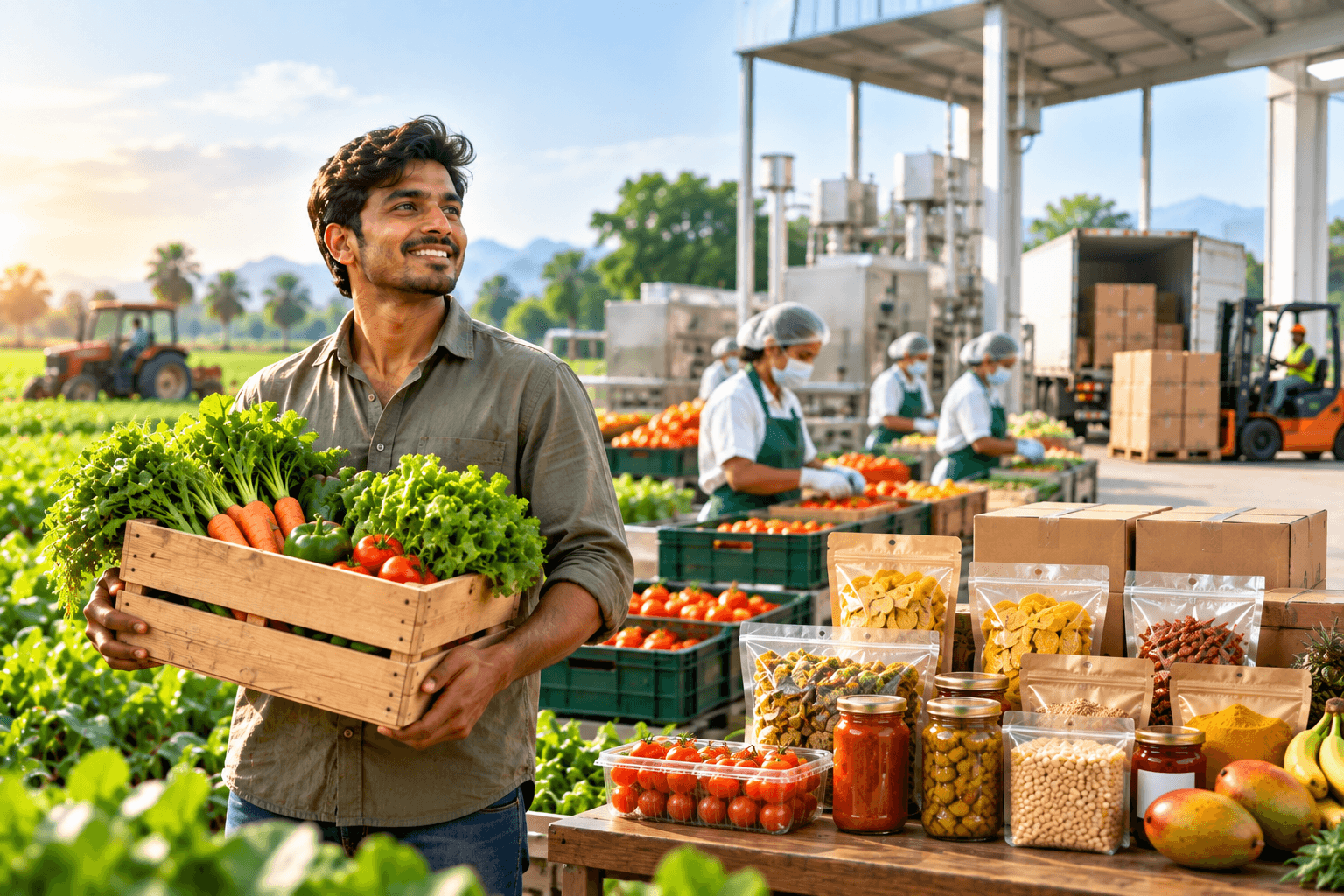
How Packaging Technology and Food Processing Skills Add Value to Agricultural Products
-
by
admin
- No Comments on How Packaging Technology and Food Processing Skills Add Value to Agricultural Products
Introduction
- Agriculture today is about more than just growing crops—it’s about creating products that meet consumer expectations and market demands.
- Raw agricultural produce often has limited shelf life and lower market value.
- Packaging Technology and Food Processing help transform farm produce into high-quality, value-added products with greater commercial potential.
- These skills enable farmers and agri entrepreneurs to reduce waste, improve product quality, and access profitable domestic and international markets.\\
Understanding Value Addition in Agriculture
Value addition helps farmers boost the value, or in other words make the quality feel stronger, of what they grow. It opens up fresher income chances and also cuts down on those annoying post-harvest losses.
What is value addition?
Value addition is basically when farm produce gets processed or packaged, so it ends up worth more. It makes the item more helpful, and also more inviting to buyers.
Why value addition is important
This approach helps farmers get better prices and it reduces waste. On top of that, it upgrades product quality, and yes extends shelf life too.
The shift from selling raw produce to branded products
Branded processed products tend to pull in more customers and can bring in higher profits. They also shape better market opportunities, rather than just selling the raw stuff and hoping for the best.
What Is Packaging Technology?
Packaging technology sort of helps protect agricultural goods, and it also boosts their overall market value, kind of you know. It keeps food fresher, makes it safer, and lets it be ready for sale.
Definition and importance
Packaging technology is the method of arranging food products in a safe way. It supports higher quality and gives the product a longer shelf-life.
Functions of modern packaging
Modern packaging protects the items, keeps the freshness longer, and includes practical details. Also, better packaging can pull in buyers, quite easily.
Types of agricultural packaging
You’ll usually spot flexible styles, rigid options and eco friendly alternatives, depending on what someone is shipping. The last choice tends to follow the exact product needs and the target audience, so really there isn’t one single best way, not even close.
What Is Food Processing?
Food processing is basically taking raw farm produce like fruit and grain, and turning it into food that’s safer, steadier quality, and often more valuable. It also reduces spoilage, and yes it can nudge the market value up.
Understanding food processing
So, food processing normally includes washing, preserving, and getting the produce ready for eating. With that, the food becomes safer and it’s usually more convenient to use later.
Types of food processing
There are a bunch of options like drying, freezing, canning, milling and packaging. Each technique fits different food categories, depending on what you’re working with.
Why food processing matters
It helps stretch shelf life and keeps the overall quality steadier. Plus it can open up stronger earning chances for farmers, which is kind a the point in a lot of places.
How Packaging Technology Adds Value to Agricultural Products
Packaging Technology helps raise product quality, cut waste, and also push up market value a lot. In a way it works for farmers and businesses so they can meet more customers, sooner. Sometimes it feels small, but it changes the whole journey.
Extends product shelf life
Solid packaging keeps goods fresh for longer. It makes spoilage less likely during storage, during transport too, and it saves time and money.
Reduces post-harvest losses
When packaging is done the right way it shields produce from bruising or other harm. That protection helps minimize losses right after harvest.
Improves product appearance
Visually strong packaging makes the product look better and more “ready” to buy. That tends to grow customer interest, which can lead to better sales.
Enhances food safety
Packaging works like a barrier against contamination and physical wear. It also supports steady product quality while it moves through the supply chain.
Builds strong brand identity
If the packaging looks branded, customers can start trusting it sooner. It also gives the product a more distinct vibe and it supports recognition on the shelf, even when the market feels crowded.
##
How Food Processing Increases Agricultural Profitability
Food processing makes farm produce more valuable and in turn helps farmers bring home better returns. It kind of opens new pathways so an agribusiness can become more profitable.
Converts raw produce into premium products
With processing, raw produce becomes something higher value. Usually these products go for better prices, so farmers benefit.
Creates multiple revenue streams
Farmers can sell not just one kind of product but a set of processed options. That way income becomes steadier, or at least there are more chances to earn.
Improves product marketability
Processed foods store better and move more easily. They also tend to draw more customers, because the product looks, behaves and is presented differently.
Enables year-round sales
Processed products last longer on the shelves. So businesses can keep selling even after the harvest season ends, not just right at the peak.
The Power of Combining Packaging Technology and Food Processing
When you mix food processing along with smart packaging you get products that feel way more premium and they often move faster, too. It also supports farmers and agri business teams because they can push more value into what they grow, then they can reach bigger markets.
Better product quality and consistency
By processing food then using the right packaging, the quality stays steadier over time. Customers get a better experience again and again, so it’s not random every batch.
Higher customer satisfaction
When products are fresh, safe, and packed in a careful way, people trust them. That trust usually turns into repeat buying and longer relationships.
Increased competitiveness in retail markets
Packaging that’s designed well helps items stand out on those store shelves. It boosts brand appeal and can push sales upward, especially where there’s lots of competition.
Greater opportunities for exports
If the food is processed correctly and then packed properly, it tends to match global expectations. That makes it easier to enter international markets, and to keep meeting the rules there.
##
Agricultural Products That Benefit from Value Addition
A lot of farm products can earn more money once theyre processed, and packed, in a way that makes them easier to sell. Value addition helps with quality and also shelf life, plus there’s usually stronger demand.
Fruits and vegetables
These can be turned into juices , jams, and dried goods. In the end it raises their worth and they last longer on the shelf.
Spices and herbs
They go through cleaning , grinding, and careful packing so they are ready for retail. When they are branded people tend to notice them more, and that becomes a small advantage.
Cereals and millets
They can be changed into flour, crunchy snacks, and ready to cook items. That kind of format usually brings a bigger price in the market.
Dairy products
Milk can be processed into cheese, butter, yogurt, and a few other dairy forms. Usually these give steadier, but also better returns overall, like it’s more predictable that way.
Organic and specialty foods
Upgraded, premium packaging makes them feel more desirable in local and international markets. Often they’re priced higher, because the audience expects more and that’s just how it goes.
Business Opportunities in Food Processing and Packaging
Food processing and packaging basically bring fresh business openings for farmers and entrepreneurs, though it often feels a bit more complicated than it sounds. When done right, they help turn raw produce into high value offerings that can reach both nearby buyers and bigger global markets.
Food processing units
Starting food processing units lets people convert fresh, raw produce into value added products. It sort of lifts the whole earning potential, and makes the business more resilient over time.
Packaged organic food brands
Organic items, when paired with good quality packaging, tend to pull in the health minded crowd. And yes, they can bring premium pricing as well, which is usually the best part.
Agri-based startups
Agri based startups can experiment with new food creations, plus packaging related solutions. This kind of thinking opens up new market doors, even if customers take time to notice.
Export-ready food businesses
With proper processing and packaging, products become more suitable for international requirements. So the business reach grows, beyond local supply chains.
Private label manufacturing
Private label manufacturing means one company makes the packaged food for another brand. That can create extra income streams, and also keep production steady when demand shifts.
Real-World Impact / Example Scenarios
Case 1 – Farmer increasing profits by processing fruits into jams and juices
Instead of selling fresh fruits immediately, the farmer makes jams and juices. That way the product value climbs and at the same time, food loss goes down, not only like in theory but in real life too.
Case 2 – Entrepreneur launching a packaged millet-based food brand
The entrepreneur develops healthy millet products, with nice looking packaging. It also helps create a solid brand, and yes it pushes sales upward.
Case 3 – Food processing business expanding into export markets through quality packaging
Using high quality packaging makes it easier to meet international requirements. That creates new chances in overseas markets, overall it becomes a whole different growth story.
Common Challenges Without Value Addition Skills
When value addition is missing, farmers often lose a chance to make better income. It can also quietly slow business growth and reduce market reach too.
High post-harvest losses
Fresh crops go bad pretty fast unless there is decent processing or packaging. Then the losses pile up and it feels harder to recover.
Short product shelf life
Most raw goods last only a short while in storage. So, it becomes more difficult to move the product, before it runs out.
Low profit margins
If people sell mostly in raw form, the returns are usually lower. In contrast, products that are transformed or refined often fetch higher prices.
Limited access to premium markets
Lots of premium buyers tend to favor processed items that look tidy on the shelf and are well packed. Without adding value, those chances are missed, even when demand exists.
How Skill Development Supports Agri Entrepreneurs
Skill development helps agri entrepreneurs make better products and end up with more successful businesses. It raises quality, boosts efficiency, and opens up bigger market chances, in a way that feels more steady.
Learning modern food processing techniques
Training supports entrepreneurs in producing safe and consistent food products. It also quietly trims waste, and keeps operations calmer.
Understanding packaging materials and technologies
Knowing the right packaging approach keeps items fresher and more appealing. It also lengthens shelf life which customers tend to notice without thinking too much.
Building quality control and food safety knowledge
Quality along with food safety builds real customer trust. It becomes a basic requirement for market success not an extra bonus.
Developing branding and marketing skills
Strong branding helps products stand apart even when shelves are crowded and kind noisy. Better marketing, brings in more customers so sales feel more steady, not just accidental. It’s like a small but lasting engine that keeps moving.
Role of Institutions Like SIILC
Institutions like SIILC kind equip students and entrepreneurs with hands on skills to help them build a successful agribusiness, not just theory. Their industry driven programs ready learners for today’s food and agriculture careers, in a very practical way.
Packaging Technology programs
These programs focus on modern packaging methods and also quality standards, so learners can handle products properly. They push better product worth and can extend the shelf life, which is a big deal in real markets.
Food Processing courses
Students cover food processing skills along with safety practices, and they learn how to keep things clean and stable. In the end this supports the creation of high quality value added products.
Agri Business Management programs
Here, agriculture mixes with business know how and marketing style. Learners are trained to run profitable agribusinesses without feeling lost, kind of like managing the whole chain.
Entrepreneurship development initiatives
People get mentorship and direction to start, then expand their own ventures. They also build practical capability for longer term business success, not only for the first step.
Future Trends in Food Processing and Packaging
The food industry keeps moving ahead, because people are wanting different things now, plus new technologies show up all the time. Because of this, trends are opening up, kind of fun opportunities for agri entrepreneurs too.
Growing demand for ready-to-eat and healthy foods
People are leaning toward convenient picks but they also want stuff that feels nourishing. Because of that, demand for processed food is climbing not only across local markets but in many regions as well. It’s sort of like a gradual turn toward simple meals with a healthier slant.
Sustainable and eco-friendly packaging solutions
Eco-friendly packaging feels more mainstream these days, across many countries. It supports a lower environmental footprint, which is pretty important as rules get tighter and public awareness grows.
Smart packaging technologies
Smart packaging boosts food safety, and also helps with product tracing and monitoring. On top of that, it can make the whole customer experience feel smoother, more responsive, and a bit more “aware”.
Expansion of premium and export-oriented food products
Premium packaged foods are getting more attention in international markets. This can translate into stronger export chances for businesses, and better chances to scale up steadily.
Building a Successful Value-Added Agriculture Business
So basically, a solid value-added agribusiness mixes good quality products with careful processing, plus branding that actually sticks. And it lets the whole business move forward in local areas, but also shows up in global markets in a real way.
Focus on quality raw materials
What you put in matters. High-quality farm produce is the starting point for a better product. When raw materials are strong, the final results tend to be better too, kind of straightforward.
Invest in modern processing and packaging
Using newer tools helps keep the product consistent. It also supports longer shelf life, and in the end the market value tends to rise, you know. Packaging is part of that, it’s not just a last step.
Understand consumer preferences
Don’t build first and hope later. Understand consumer preferences before developing products. That way you’re more likely to match expectations and push sales up.
Build a strong and trusted brand
A brand that people trust pulls in repeat buyers. Plus, clear branding makes it easier for customers to recognize you quickly, and that matters over time.
Explore domestic and global market opportunities
Try selling in domestic markets as well as international ones. Doing that opens more avenues for growth and higher income opportunities, instead of relying on just one place.
Conclusion
Packaging Technology plus Food Processing can really help farmers and agri entrepreneurs, you know, add more value, cut down spoilage, and push profits higher. When you mix those capabilities with smart business habits, they can end up building an agribusiness that stays solid for the long run, even as conditions change.
- Call to Action: Ready to move forward in your agribusiness path? Check out SIILC’s Packaging Technology, Food Processing and Agri Business Management programs. Learn hands on skills so you can turn raw produce into value-added items, and grow a profitable agriculture enterprise.
FAQs
- What is Packaging Technology in agriculture?
It sort of involves wrapping and packing agricultural products in a way that helps their overall quality, safety , and also extends their shelf life in the end.
- How does Food Processing increase farm income?
Food Processing changes raw produce into things with more value , so farmers can sell them at higher prices rather than only fresh outputs.
- Which agricultural products can be value-added?
Well, fruits and vegetables, spices, cereals, dairy products and even organic foods can be turned into value-added options.
- Why is packaging important for food exports?
Because good packaging shields products during shipping, keeps quality stable ,and also helps them follow international market rules.
How can I learn Packaging Technology and Food Processing? You can join SIILC’s Packaging Technology, Food Processing and Agri Business Management programs, so you gain practical know-how that is more industry focused.