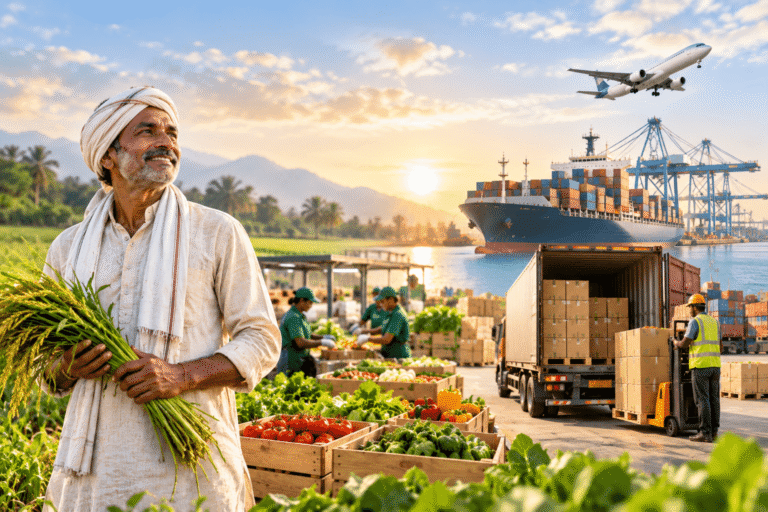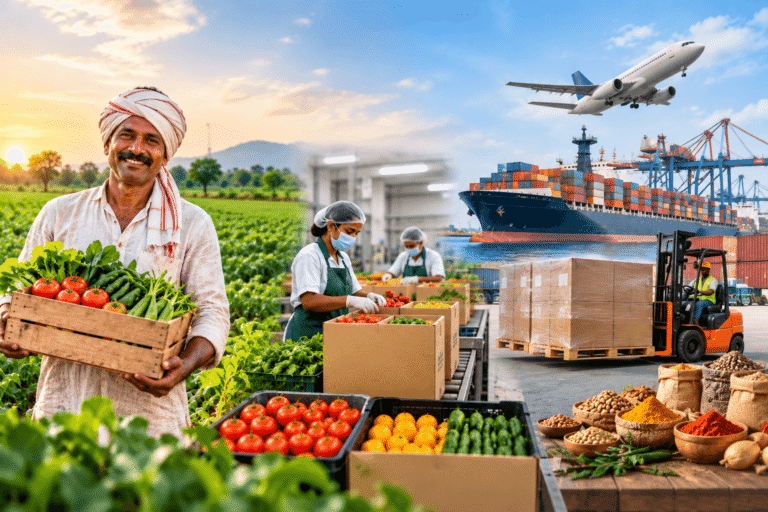

How Agri-Business Management and Export-Import Skills Can Build a Profitable Agriculture Career
-
by
admin
- No Comments on How Agri-Business Management and Export-Import Skills Can Build a Profitable Agriculture Career
Agriculture is no longer just about cultivation. Today, it is rapidly transforming into a business-driven industry. Today’s farmers and agricultural entrepreneurs operate in a dynamic environment shaped by market demand, pricing fluctuations, supply chains, and global trade. Simply growing crops is not enough to ensure profitability.
To truly succeed, modern agriculture requires a blend of business strategy and market expansion. This is where agri-business management and export-import skills come into play. Together, they open up high-profit opportunities by helping individuals move beyond local markets and tap into global demand.
The Transformation of Agriculture into Agri-Business
From farming to agripreneurship
The role of a farmer is evolving into that of an agripreneur, someone who not only produces but also markets, processes, and sells agricultural products strategically.
Growing demand for value-added agricultural products
Consumers today are willing to pay more for processed, organic, and high-quality agricultural goods. This shift has created opportunities for value addition, branding, and premium pricing.
Role of global markets in agricultural growth
With increasing globalisation, agricultural products are no longer confined to local mandis. International markets offer better pricing, greater demand, and growth potential for Indian produce.
What Is Agri-Business Management?
Agri-business management involves applying business principles to agriculture, covering areas like production planning, marketing, finance, supply chain, and operations.
Key skills in agri-business management
It includes skills such as market analysis, financial planning, logistics management, branding, and understanding consumer behaviour.
Importance of modern agriculture careers
Without business knowledge, farmers often struggle with pricing, distribution, and profitability. Agri-business skills help maximise returns and build sustainable ventures.
What Is Export-Import Management in Agriculture?
Understanding export-import processes
Export-import management involves the procedures required to trade goods across borders, including documentation, compliance, logistics, and payment systems.
Why export-import skills matter for farmers
Farmers with export knowledge can directly access international buyers, reducing dependency on intermediaries and increasing profit margins.
Key elements of export-import management
These include understanding trade regulations, quality standards, packaging, shipping logistics, currency exchange, and international marketing.
How Combining Agri-Business Management + Export-Import Management Creates Opportunities
Expanding from local markets to global markets
When agricultural producers understand both business and trade, they can move beyond local sales and enter international markets where demand and pricing may be more favourable.
Building a strong agri supply chain
Effective management ensures the smooth movement of goods from farm to consumer, reducing wastage and improving efficiency.
Increasing profitability through exports
Export markets often offer better pricing for quality produce, allowing farmers and entrepreneurs to earn higher margins.
Creating diversified income streams
By combining production, processing, and exporting, individuals can create multiple revenue streams, reducing dependency on a single source of income.
Career Opportunities in Agri-Business and Export-Import
Agri-entrepreneur / Agripreneur
Starting and managing ventures in farming, food processing, or agri-tech.
Export-import manager in the agriculture sector
Handling international trade operations for agricultural products.
Agri supply chain specialist
Managing logistics, storage, and distribution networks.
Food processing and distribution business owner
Creating value-added products and supplying them to wider markets.
International trade consultant for agri products
Advising businesses on exporting strategies, compliance, and market entry.
Real-World Success Scenarios
Case 1 – Farmer exporting organic produce
A farmer shifts from selling locally to exporting organic fruits and vegetables, earning premium prices in international markets.
Case 2 – Entrepreneur building an agri-export startup
An entrepreneur sources produce from farmers, processes and packages it, and builds a brand catering to global buyers.
Case 3 – Graduate starting an agri-business
A young graduate leverages training to start a niche agri-business that serves both domestic and international markets.
Benefits of Learning Agri-Business + Export-Import Skills
Learning these combined skills significantly enhances earning potential compared to traditional farming methods. It provides access to global markets where pricing advantages can lead to higher profits. It also helps in diversifying risk by not relying solely on local demand or seasonal fluctuations. Over time, this combination supports sustainable career growth by building a scalable and resilient business model within agriculture.
Challenges Without Proper Training
Lack of knowledge about global trade regulations
Without understanding compliance and documentation, entering export markets becomes difficult.
Poor supply chain and logistics management
Inefficiencies in storage, transportation, and delivery can lead to losses.
Missed export opportunities
Many farmers are unaware of global demand trends and fail to capitalise on them.
Financial risks due to improper planning
Lack of business knowledge can result in poor investment decisions and unstable income.
How SIILC Helps Build Profitable Agriculture Careers
Agri-Business Management programs
SIILC offers structured programs that teach the fundamentals of managing agricultural ventures as profitable businesses.
Export-Import Management courses
Learners gain practical knowledge about global trade processes, enabling them to confidently explore international markets.
Industry-oriented curriculum
The courses are designed to align with real-world industry needs, ensuring practical applicability.
Mentorship and career guidance
Expert guidance helps learners navigate challenges, identify opportunities, and build successful careers.
The Future of Agriculture Careers
Rise of agri-entrepreneurs and global traders
More individuals are moving toward entrepreneurship within agriculture, driven by better earning potential and innovation.
Integration of technology, business, and trade
The future of agriculture lies at the intersection of smart farming, business strategy, and international trade.
Agriculture is becoming a high-income, global industry.
With the right skills, agriculture is no longer a low-income sector but a global industry with immense growth potential.
Conclusion
Agriculture today is far more than cultivation; it is a gateway to global business opportunities. By combining agri-business management with export-import skills, individuals can unlock higher profitability, scalability, and long-term success.
Join SIILC’s Agri-Business and Export-Import Management programs and build a profitable, future-ready career in agriculture.
FAQs
What is agri-business management?
It is the application of business principles to agricultural production, processing, and distribution.
How can farmers benefit from export-import skills?
They can access international markets, earn better prices, and reduce dependency on intermediaries.
Is export-import suitable for beginners in agriculture?
Yes, with proper training, even beginners can learn and enter global trade.
What are the best agri-business opportunities today?
Organic farming, food processing, agri-export businesses, and agri-tech ventures are among the top opportunities.